The Dream
A lot must have happened...
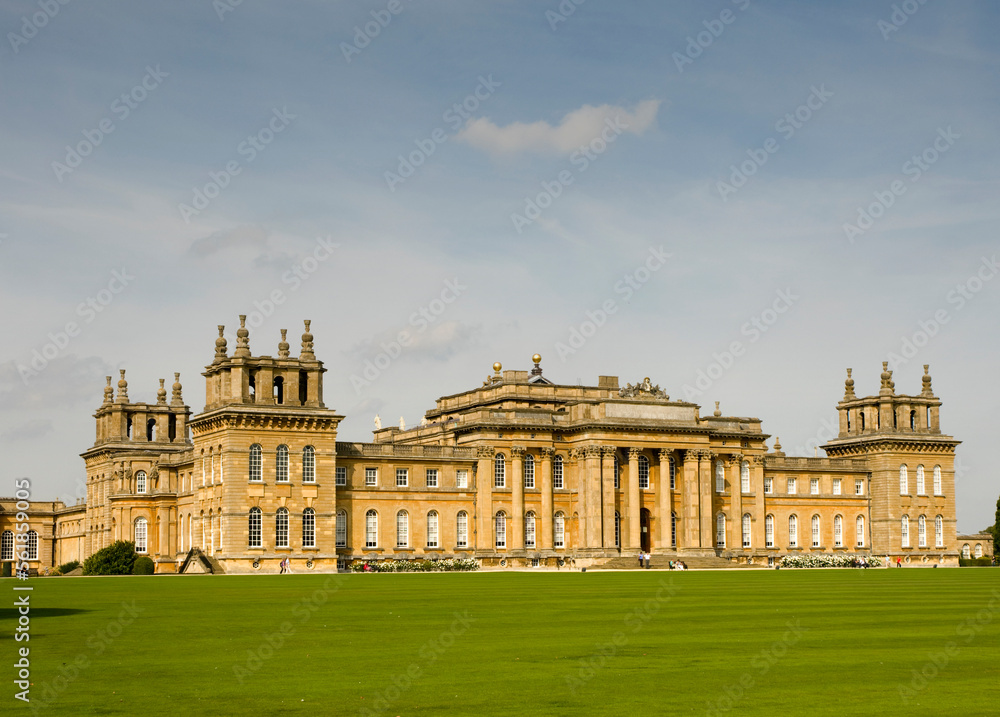
Blenheim palace
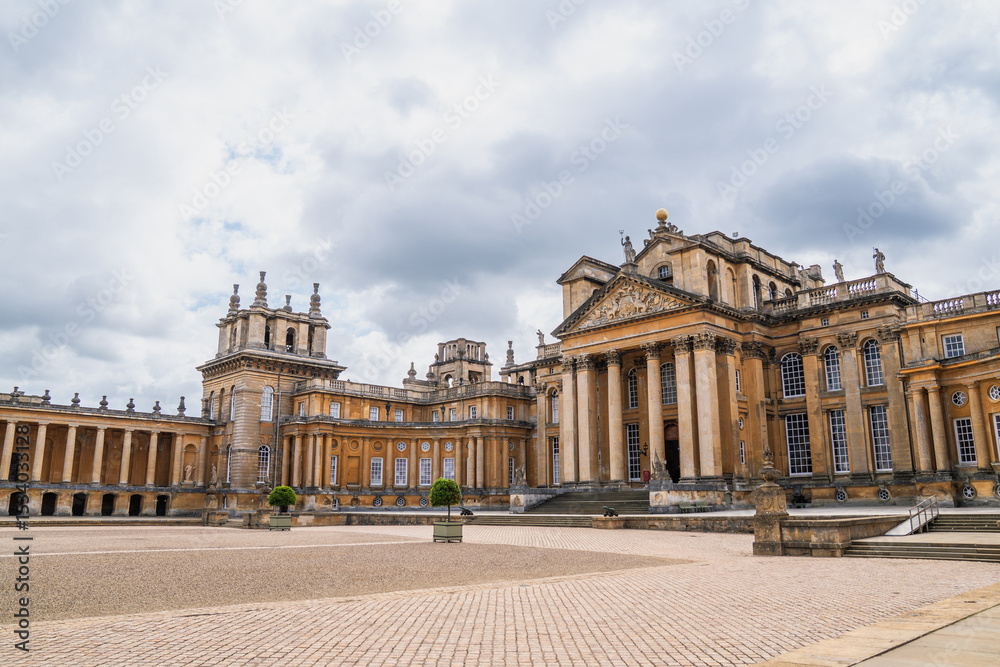
This blog is inspired after a visit to Blenheim Palace in October 2026. Blenheim Palace is of course the birthplace of Winston Churchill, one of the most influential figures of the last hundred years (and counting). Churchill once said of Blenheim:
“At Blenheim I took two very important decisions: to be born and to marry. I am happily content with the decisions I took on both those occasions.”
I have always enjoyed the moment of standing where great men and women of history have stood, and Churchill is surely a great man. It is my opinion that we owe him a great deal. Churchill’s famous quote “Never in the field of human conflict was so much owed by so many to so few”, applied to himself by the end of the war, as much as those lost at the battle of Britain. To make decisions that will chart the course of history, the crushing responsibility, to grasp the consequences of failure, and to be stubborn but not reckless, all require an incredible caliber of person.
It was not until my visit that I came to realise just how prolific Churchill had been in his writing and painting. A Nobel prize for literature winner, and no fewer than 500 painted works in his lifetime. And after only beginning painting at the age of 40! I shall have to get a print for my wall at some point.
I have also never read any of Churchill's writings (beyond pop culture). I have listened to a number of his speeches though, and I am familiar with his oratory style. Upon returning home I found a short story titled “The Dream”, and read it that evening. I found it thoroughly fascinating, and felt compelled to write something. That said, there are dozens of articles and studies online regarding this piece written by people far more knowledgeable on Churchill than I. As such, I am opting to describe what I saw when I read it, and leave the deep dive to the professionals.
So here I am writing this blog weeks later, with glass of wine in hand. I hope Churchill would approve.
The Dream
The Dream was written in 1947 in the aftermath of World War Two, and at a political low point for Churchill. As my first entry into Churchill’s “fictional” writing, I was surprised by what I read, though I don’t know what I expected. The writing is terse, almost entirely written in short-form dialogue. It is an incredible reflection on the first half of the 20th century through the eyes of a man so responsible for the outcome.
The story is written as a recount of the events of the previous 50 years to a man that had no modern context, but a man that Churchill cared about for approval. The ghost of his father. Even more interesting is that at no point during the conversation does Churchill let on that he was in any way involved with the events described, instead waiting to hear what his father would say of them. It is a simple but highly effective premise; he uses his father’s questions as a mirror to reflect on his own thoughts. He becomes a critic of the part he played.
In the opening exchange his father remarks that he would never have thought his son would grow up to be a painter, with Churchill responding that it is only a hobby. His father then further points out that he was sure that Churchill could never make his living that way. The relational tone is set. Addressing his father as “Papa” throughout, he is reduced to childhood once more. The concealment of his involvement perhaps even defensive; who knows what your father will think. The imagery of an older Churchill in conversation with his much younger father, is itself an interesting dynamic to think about.
“A lot must have happened”
One thing that particularly stood out to me upon reading is the frankness with which it is written. There are opinions on the economy, the outcome of war, women’s suffrage, and religion. It is written without explanation, with a disregard as to what others might think, as if nobody was listening. The reader is an eavesdropper into a conversation between people who know each other well, never intended for public consumption. This might even have been the case, given that the original title of the story was “Private article”, and it was not published until a year after his death in 1966, some 19 years later.
“Europe is a ruin”
In The Dream, his father always speculates positively as to the implication of the events that have unfolded. To highlight what was won. When encroaching upon tragedies of the early century, Churchill also repeatedly softens the tone. There is a new world organisation where Great Britain and the United States will be important. Perhaps India will return to the English-speaking fold. However, his father presses for more detail on the wars that followed. Churchill removes the editorial pillars, and buries him under the facts. Russia is despotic, more so now than in his father’s day. Germany and France are a pile of rubble.
“But wars like these must have cost a million lives”
The underestimate of the century. The climax of the tale revolves around a single paragraph that summarises the events of the two World Wars. As if either of them can be summarised in 100 words. The paragraph is primed nicely by the conversation on the Boer war that preceded it, where his father underestimates the military force required for the Boer War, guessing forty thousand men. Taken aback by the real size being closer to quarter of a million soldiers. When told of the human cost of the two World Wars and the German death camps, his father can only sit in silence.
There is no description in the prose as to how this paragraph is delivered. In my mind I can only see one way it could possibly be told. Sober, evenly without inflection, with a self-realising tone. Almost with guilt, like a confession. The sort of numbers that can only be fully grasped when spoken aloud, and in such temporal proximity to the events. Coming to terms. This cannot have been a cost that would be paid for any reason except necessity. There is no moment of enlightenment. There is no triumph to be had.
But then, Churchill’s sense of humour shines through. The punchline.
“Of course you are too old now to think about such things, but when I hear you talk I really wonder you didn’t go into politics. You might have done a lot to help. You might even have made a name for yourself.”
The reader, begging for Churchill to explain his involvement. But it never comes. And independent of any cue from Churchill, his father reveals he believes that Winston had the potential to make a difference. Closure. It is both funny and moving, and perfect relief to what is a desperately bleak moment.
It is also a rare sight to see Churchill’s own embedded doubt. Did I make a difference? Could I have done more? Asking himself the question. It is a masterful setup.
Wrap-up
The Dream is excellent, and the more I revisit it, the more I think I grasp. His father represents Churchill’s own “victorious” attitude that he is known for, while Churchill himself takes the other side of his own argument. Pouring on the cold reality of what has come to pass upon the man out of time, drowning him by the end. How have things come to this? The events that have occurred are unthinkable, far worse than anything that my father would have imagined.
By the end, the tone shifts. More respect is afforded as Churchill’s description of the future deviates from his father’s guesses. The closure of his father’s comments on his potential never happened, but I afford myself the speculation that it’s what Churchill certainly would have hoped for could his father have seen his finest hour.
It is a wonderful piece of writing, and I found it very poignant. It showcases Churchill’s matter-of-fact style, his sense of humour, and an insight into his desires and thoughts in the immediate aftermath of the century’s biggest conflict. A bitter critique and perhaps a “coming to terms” of his own involvement. I would recommend it to anyone. Pay no attention to the ghost of Churchill sitting in the chair opposite.
I never got an opportunity to explore the grounds of the palace this visit, denied somewhat by the Autumn weather. I look forward to returning in the Spring.